

★★★★★
"I was very impressed. He was on time and set up both key fobs and cut both keys for my car and it only took about an hour. He really knows his stuff and I really appreciated it."
— Glenn Buckboro · Google review
When a key fob stops working, try a new ~$5 coin-cell first. If that doesn't fix it, I diagnose the fob at your vehicle across Winnipeg and southern Manitoba. At RAXO Auto Locksmith, fob programming is $90+ plus tax. Text 204-599-5117 for a written quote before I drive out.
I'm Leo, and I quote and do every job myself. If a fresh coin-cell doesn't bring your fob back, text me and I'll tell you what it needs.
Drivers I’ve helped — read the reviews →

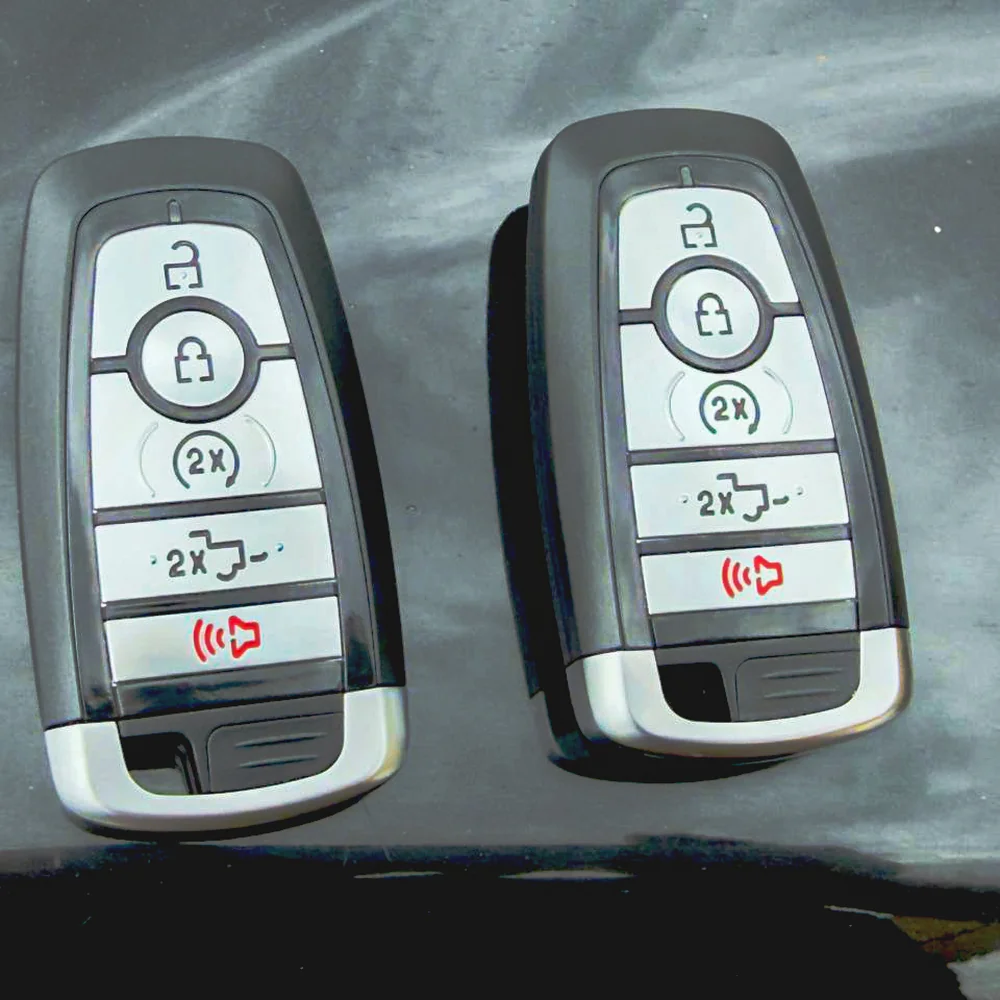
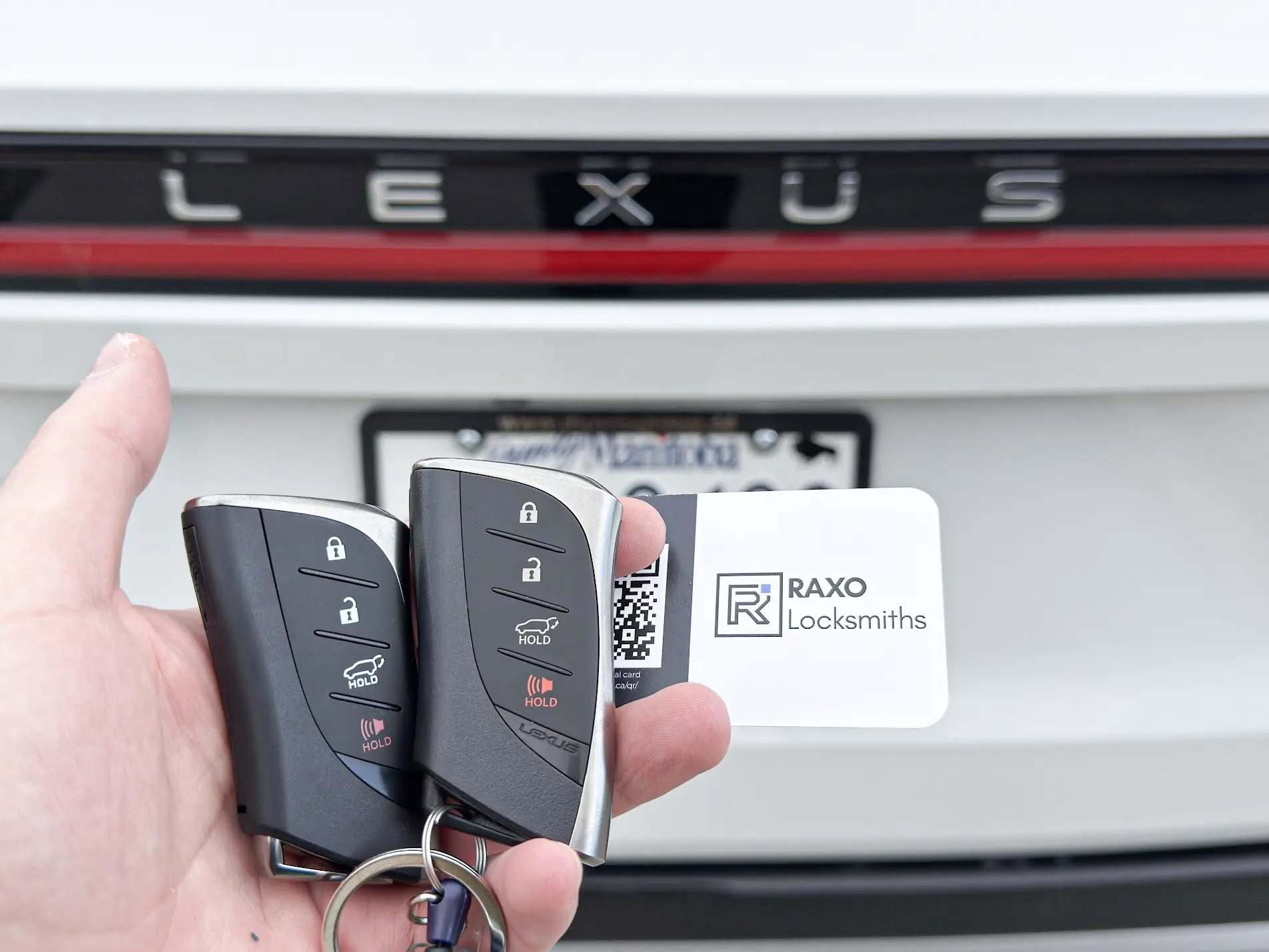
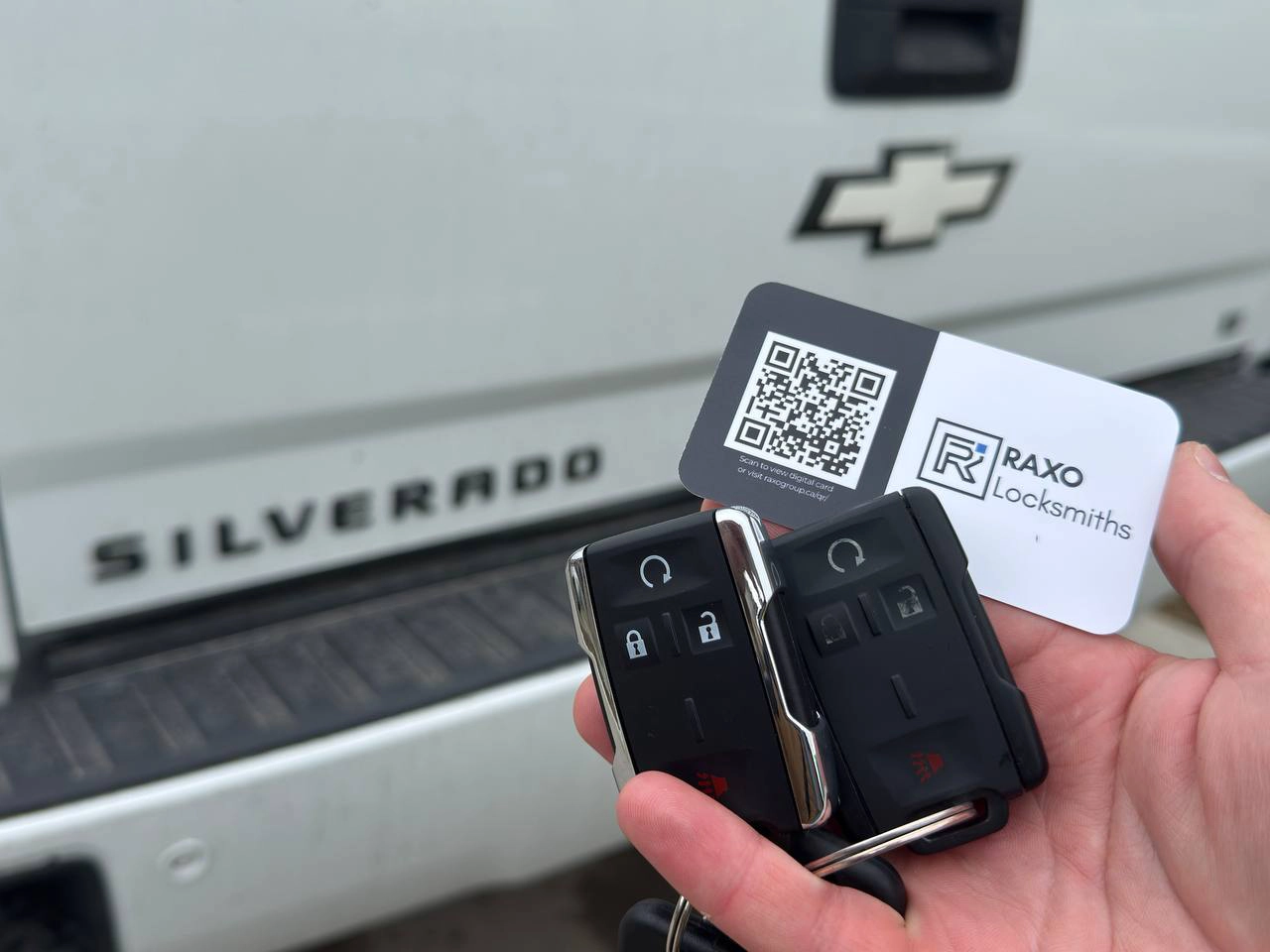
Find the right battery
Almost every car key fob runs on a flat coin-cell — and the part number tells you exactly what to buy. The digits are the dimensions in millimetres:
| Battery | Size | Notes |
|---|---|---|
| CR2032 | 20 × 3.2 mm | Most common |
| CR2025 | 20 × 2.5 mm | — |
| CR1632 | 16 × 3.2 mm | — |
| CR2450 | 24 × 5.0 mm | — |
That tiny difference is why people grab the wrong one — a 2025 will rattle in a 2032 slot and a 2032 won't always close in a 2025 holder.
The surest way to know yours: pop the fob open and read the number printed on the old battery. CR2032 and CR2025 cover the big majority; CR1632 and CR2450 show up on some models. Once you know the code, any Canadian Tire, hardware store, or drugstore has it for about $5–10. Buy a two-pack and keep the spare in the glovebox.
Good news on programming: you almost never need to re-pair the fob after a battery swap. The battery only powers the little radio inside — your car remembers the fob separately, so it keeps working the moment the fresh cell goes in. (The rare exception: a fob that sat dead for weeks, or a car whose main battery was disconnected, which can need a quick re-pair.)
Do it yourself
No tools beyond a coin or a small flat-blade, and about five minutes. If it works after this, you've saved yourself a service call entirely.
Identify the battery
Pick up the exact match for the code you read off the old cell above — or check your owner's manual if the marking's worn off.
Open the case
Most fobs split along a visible seam — slide out the hidden metal key first, then pry gently with a coin or a plastic tool. Some have a small screw under a sticker on the back. Don't force it; the clips snap easily.
Swap it — same way up
Note which way the old battery sat before you lift it out. On most fobs the + (printed) side faces up. Try not to touch the flat faces of the new cell — skin oil dulls the contact over time.
Snap shut, test from a few metres back
Stand away from the car so you know the radio signal is actually reaching it. Touching the car can give a false pass.
Gotcha — upside-down kills it
A coin-cell installed backwards won't power the fob at all. If it's dead right after the swap, pop it open and flip the battery before assuming anything's broken.
Still nothing?
If a known-good fresh battery doesn't bring it back, the battery isn't the problem. Skip to when it isn't the battery below.
The Winnipeg part
Coin-cell batteries lose voltage in deep cold. A cell that was already a little weak in October will read fine in a warm pocket but drop below the level the fob needs to transmit the moment it's sitting in a −30 °C car overnight. That's why so many "it just quit out of nowhere" calls land in the first hard cold snap.
If your range has been getting shorter through the fall, swap the battery before winter rather than after you're standing in a parking lot at −30. Keep the old cell as a backup. More winter car-key tips on the RAXO blog.
−30°
A marginal coin-cell that works in the fall often won't transmit once it's cold-soaked overnight.
You've put in a known-good battery and the fob still won't work. Now it's worth me coming out. Here's what it usually turns out to be — and where each one goes.
Most likely
Buttons click cleanly, fob feels normal, but the car ignores it. Common after a fob sat dead for weeks or the car battery was disconnected. I re-pair it at your car.
Sometimes
Some buttons work and others don't, or the fob got wet or was dropped and never fully recovered. Sometimes the case is salvageable; often a replacement is the right call. I diagnose at your car.
If you've lost it
Lost your only fob? That's not a battery or a re-pair — it's a brand-new fob made and programmed from scratch, with ownership verification. Different price, different process.
Brand-specific fob-battery notes on the Mazda, Honda / Acura, and Nissan / Infiniti pages. Full pricing across every service on the pricing page.
I'd rather save you a service call than take one for a battery. Here's the honest math.
Do it yourself
~$5–10 part
A coin-cell from Canadian Tire, a hardware store, or any drugstore. Five-minute swap with the steps above. No service call, no charge from me.
If you'd rather I handle it
$90+ minimum
My minimum visit is $90 plus tax, so a battery swap alone is bad math — but the battery is included free if I'm already at your car for programming or another job. Written quote first, every time.
Five stars on Google — early but real. Here are three.
"I was very impressed. He was on time and set up both key fobs and cut both keys for my car and it only took about an hour. He really knows his stuff and I really appreciated it."
— Glenn Buckboro · Google review
"Great service! He quickly made a copy of my car key, and it works perfectly. Friendly, professional, and fair price. Highly recommend!"
— Oleh Vashchenko · Google review
"Precise, polite and punctual."
— Dominic Ibeme · Google review
5.0 average · all verified on the Google Business Profile. No padding, no buying.
Updated October 2026
If yours isn't here, just text me. More on the full FAQ page.
The classic signs: the range drops so you have to be right next to the car, the fob works only sometimes, the buttons feel mushy, or the dashboard shows a "key battery low" message. A fresh coin-cell is a $5 fix, so it's always worth ruling out first before paying anyone — including me.
Most are a CR2032 or CR2025 coin-cell. The surest way to know: open the fob and read the number printed on the old battery. The digits are the size — CR2032 means 20 mm wide and 3.2 mm thick; CR2025 is the same width but thinner at 2.5 mm, which is why they're easy to mix up. CR1632 and CR2450 show up on some fobs too.
Usually no. Most fobs keep their pairing through a battery swap and work the moment the new battery goes in — the battery only powers the radio, the car remembers the fob separately. Occasionally a fob that sat dead for weeks, or a car whose 12-volt battery was disconnected, needs a re-pair. That's a programming job, not a battery one.
I can, but my minimum visit is $90 plus tax, and a coin-cell is about $5–10 at Canadian Tire or any drugstore. Paying me to swap a battery alone is bad math — I'd rather you keep the money. It makes sense only if I'm already at your car for programming or another job, where the battery is included if it's needed.
At RAXO Auto Locksmith in Winnipeg I see this every winter: coin-cell batteries lose voltage in deep cold. A battery that was already weak in the fall will quit on the first −30 morning, because the cold drops it below the level the fob needs to transmit. If yours is acting up as the temperature falls, swap it before winter and keep the old one as a glovebox backup.
Then it isn't the battery. The usual culprits are lost programming (buttons click but the car ignores the fob), a damaged fob (got wet or dropped), or a vehicle-side fault. Text me your year/make/model and what's happening — I diagnose at your car and send a written quote first. If it turns out to be the car and not the fob, I tell you that instead of billing for nothing.
No — that's all-keys-lost, not a battery swap. I generate a brand-new fob from scratch and program it to your car, with ownership verification. The price and process are different. See Lost All Keys for the full breakdown.
Written quote before I dispatch. If it turns out to be the car and not the fob, I tell you that instead of billing for nothing.